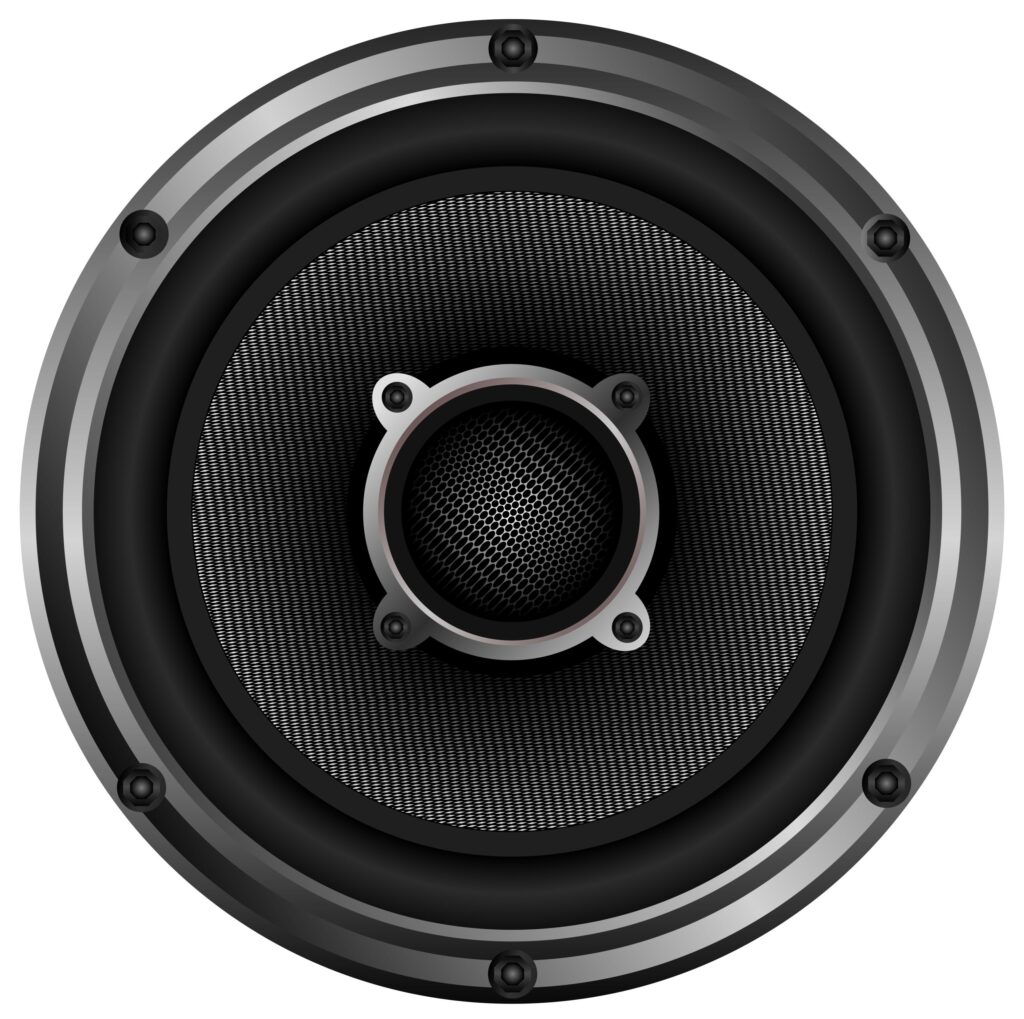
Speaker Refoaming Frequently Asked Questions
Find The Right Part You Need for Your System
The Speaker Exchange has every part you need for DIY speaker repair. From tweeter repair components to replacement speaker diaphragms and beyond, you’ll find everything you need right here. Our high-quality components are designed to ensure optimal performance and long-term durability for your sound system. If you need a new cone for reconing, you’ll find exactly what you need on our website.
Whether it’s the voice coil, spider, cone, surround gaskets, dust cap, or leads, we have the right part for your speaker system for easy repair. Reconing returns your speaker to its original, new condition if the original parts are available or as close as possible to new, depending on the choice and availability of cone parts.
Our goal is always to match the new speaker parts to the original parts as closely as possible. If the original parts aren’t available, we’ll match them as closely as possible with what’s in stock.
Our DIY speaker refoam kits help you make easy repairs. If the surround on your speaker dry rots, simply purchase one of our kits for a quick, easy, and reliable repair job. It usually takes approximately one hour, and your speaker will return to sounding as good as new. We carry refoam kits, butyl rubber surround kits, and re-edge kits to ensure you find the right parts you need for your system.
Contact Us Today
Explore our top-quality speakers and parts—shop now and elevate your sound experience!
We Offer Every Kind of Speaker Component for Every Make & Model
At The Speaker Exchange, we sell every component for every make and model. If you’re unsure which parts you need, please contact us and include your make and model and additional information; we’ll be glad to help. Here are some examples of the parts we carry:
Cone
The speaker cone may be made of paper, carbon fiber, clear or black polypropylene, aluminum titanium, fiberglass, ceramic, granite, magnesium, or Kevlar. Not all of today’s replacement cones are available in the same materials to match the original, but they should still work for your repair.
Surround
This part may feature a paper, foam, accordion, butyl rubber, single cloth, or M-roll cloth edge. The surround can be rolled up or inverted and rolled down, so it’s important to identify whether you have an M-roll or a single-roll surround.
Voice Coil
One of the most important components of the speaker is the voice coil, which is made of wire windings wound around an aluminum or other material that exactly fits into the magnetic gap. The voice coil’s windings, the primary source of movement within the speaker, are meticulously tailored in length and resistance to complement the speaker’s design.
These windings are usually available in resistance levels of 2, 4, 6, 8, 10, 16, or 32 ohms, depending on the speaker’s requirements; this affects the overall performance and sound quality.
This is just a small sampling of our many different speaker components. We proudly sell parts for nearly every make and model and will help you find the right ones for your needs.
If you need a speaker repair or want to purchase a replacement part, email The Speaker Exchange or contact us today!
Frequently Asked Questions
A: Refoaming is the replacement of the outer foam suspension that attaches the cone to the speaker frame and (in most cases) the center dust cap. It does not return the speaker to new as reconing does, but it is a less expensive speaker repair option that works well in most circumstances.
A: The angle or flat refers to the way the foam attaches to the cone. If the cone has a flat lip that the foam will attach to then you need the flat foam. If the foam attaches at a slight angle to the cone without the lip, then you need the angle foam. Sometimes the sizes for one will work better than the other for a particular application. Either foam will work in place of the other, but using a flat foam on an angled cone (or vice-a-versa) just makes the attachment process a little bit more difficult.
A: Not all the same size or same material dustcaps are still available so we must use what is currently available or what we feel will fit the cone or voice coil best. We generally send a larger than original dustcap with refoam kits so the new dustcover will cover the original adhesive lines.
A: There are two parts that help to keep the voice coil centered in the magnetic voice coil gap. One is the spider and the other is the cone. When the surround has deteriorated, we recommend that you cut off the dustcap and use the shims provided with the refoam kit to lock the voice coil-cone assembly in place. This insures that the voice coil remains centered during the refoaming process. (Exceptions to this are Bose 802 or 901’s and Infinity Bullet speakers. These must be refoamed by “ear” and feel.)
A: Many of the original parts are no longer being made for some of the older model speakers. Sometimes you must use a foam that is slightly larger than the original foam and cut and seam it to become the size you need.
A. The foam deterioration process tends to happen at relatively the same time. If one appears good now, it will probably show the deterioration in a few days to weeks even though it is actually breaking down now.
A. No, nobody caused this surround deterioration. It is caused by environmental conditions and happens every 5-25 years. Deterioration rates are affected by environmental conditions and where you live.
A. We have been asked for the roll specs. It can be difficult to find the right size foam for your needs. If you can find a foam that closely matches your OD and ID size requirements then whether or not the roll itself is an exact match is not as important. As in everything we do, we began to list the roll info because it was requested. The FOAM OD and ID are the dimensions of the actual surround. The ROLL OD and ID are the dimensions of the curve portion only.
There are two parts that help to keep the voice coil centered in the magnetic voice coil gap. One is the spider and the other is the cone. When the surround has deteriorated, we recommend that you cut off the dustcap and use the shims provided with the refoam kit to lock the voice coil-cone assembly in place. This insures that the voice coil remains centered during the refoaming process. (Exceptions to this are Bose 802 or 901’s and Infinity Bullet speakers. These must be refoamed by “ear” and feel.)
A. We have set up pictures and a tutorial in our How To Section.
A. The short answer is yes, but not easily. We are often asked if a butyl rubber surround lasts longer than a polyfoam surround. In reality, it does last longer, but it does dry rot just like the polyfoam. You might gain some time, but some experts believe you will experience a small bass loss as well. It is difficult to find the right size butyl surround and they are difficult to work with as they don’t hold their shape well and do not adhere well to the cone or frame. Also, bear in mind that if a speaker has been designed for a woofer with a foam surround, if you change the set up, you are changing the factory parameters. If you are determined to have a butyl surround, in most cases, the speaker can be reconed. There are many more cones that come with a butyl edge as opposed to individual butyl surrounds.
A.
We have seen other vendors offer a white adhesive for foam attachment. It can be easier to work with because it does not dry as quickly so it gives more “fudge” time. We include a contact glue with our refoam kits. We find that it more closely matches the specifications of the original speaker manufacturers and the adhesion lasts longer. We use the latex for attaching foams to styrofoam cones and doping or sealing some double roll paper cone edges and cloth surrounds. However, do not follow the instructions on the glue package and spread on both surfaces. Do not apply adhesive to the foam. Applying glue to the foam causes the foam to curl and makes it difficult to attach properly.
A. Yes, we can easily substitute the white latex for the contact glue we normally send with the refoam kits. Simply request it when you place your order.
A. The short answer is yes, but not easily. We are often asked if a butyl rubber surround lasts longer than a polyfoam surround. In reality, it does last longer, but it does dry rot just like the polyfoam. You might gain some time, but some experts believe you will experience a small bass loss as well. It is difficult to find the right size butyl surround and they are difficult to work with as they don’t hold their shape well and do not adhere well to the cone or frame. Also, bear in mind that if a speaker has been designed for a woofer with a foam surround, if you change the set up, you are changing the factory parameters. If you are determined to have a butyl surround, in most cases, the speaker can be reconed. There are many more cones that come with a butyl edge as opposed to individual butyl surrounds.
A. If you have a syrofoam cone, request the latex for adhesives instead of the contact glue. The contact glue will not work with the styrofoam cone.
A. It is more difficult to get adhesives to bond to a polypropolene cone than to a standard paper cone. To deal with this, use a Very LIGHT grade sandpaper and scuff the edge of the cone that will attach to the foam to create a better bonding surface for the adhesives.
How To’s for DIY Refoaming:
- Refoaming Video
- Refoaming Instructions
- How To Measure Your Foam:
More FAQ’s:
- How To Find a Smaller Foam
- How To Identify Parts of a Speaker
- How To Remove the Old Foam
- How To Remove the Beauty Cover
- How To Attach Foam to Polypropolene Cone or Styfofoam Cone
Domestic Shipping Options:
USPS (United States Post Office)
USPS Ground Advantage: 2-7 day estimated* delivery time. Limited tracking information
UPS (United Parcel Service)
UPS Ground: 1-6 day delivery time, depending on destination. Detailed tracking information provided.
UPS Expedited Services are as stated; 3 Day Select: Delivery within three business days. 2nd Day Air: Delivery within two business days. Next Day Air Saver: Delivery next business day. Detailed tracking provided for all.
*The above transit times are estimated only.
**All shipments are fully insured in case of damage or loss.
International Shipping Options:
USPS (United States Post Office)
USPS First Class International: 1-4 week delivery time. Limited tracking information.
USPS Priority International: 1-2 week estimated* delivery to customs with tracking information provided.
USPS Priority Express International: 3-5 business days estimated* to customs with tracking information provided.
UPS (United Parcel Service)
UPS Worldwide Expedited: 2-5 days to most countries, door to door. UPS has its own customs which speeds up delivery. Detailed tracking information provided.
UPS Worldwide Saver: 1-3 days to most countries, door to door. UPS has its own customs which speeds up delivery. Detailed tracking information provided.
*The above transit times are estimated only.
**All shipments are fully insured in case of damage or loss
